


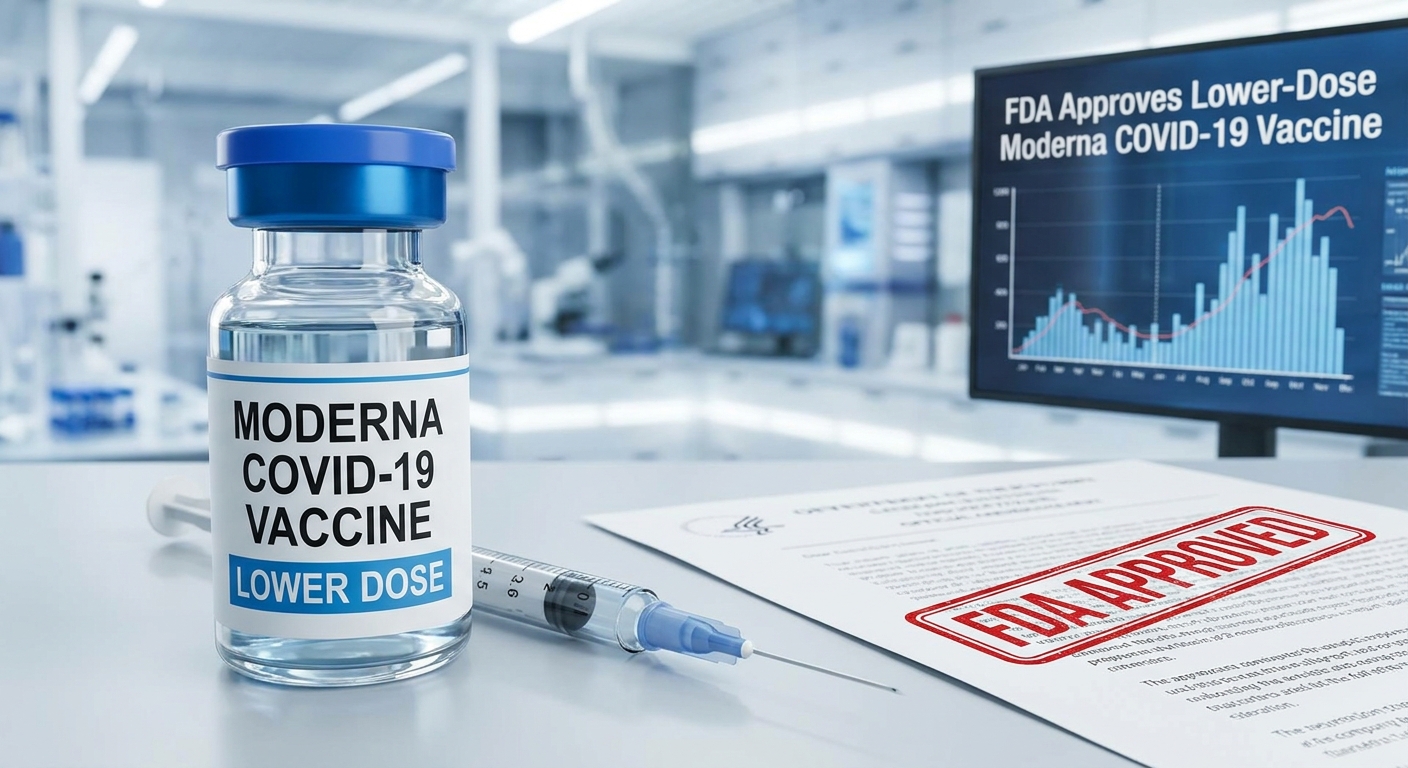
FDA Approves Moderna’s New Lower-Dose COVID-19 Vaccine
In a significant development in the ongoing effort to manage COVID-19, the U.S. Food and Drug Administration (FDA) has granted approval for a new, lower-dose version of Moderna’s COVID-19 vaccine. This latest formulation is designed to provide robust protection against circulating variants while potentially reducing the incidence of temporary side effects, a move aimed at encouraging broader uptake in future vaccination campaigns.
The approval marks another step in the evolution of COVID-19 vaccines, transitioning them into a more refined, routine part of public health strategy, similar to the annual flu shot.
What Makes This Vaccine Different?
The primary distinction of this newly approved shot lies in its dosage and updated composition. It represents a strategic refinement based on years of real-world data and clinical research.
Reduced Dosage for Better Tolerability
The most notable feature is its reduced mRNA dosage compared to the original primary series and earlier boosters. Clinical trials submitted to the FDA demonstrated that Moderna’s new lower-dose COVID-19 vaccine elicits a strong and protective immune response, comparable to that of its higher-dose predecessors. The key benefit of this approach is a significant reduction in reactogenicity—the vaccine’s tendency to cause short-term side effects. Trial participants reported fewer instances of common reactions such as:
- Fatigue
- Muscle aches
- Headache
- Fever and chills
This improved safety profile could make the vaccine a more attractive option for individuals who have previously hesitated to get boosted due to concerns about feeling unwell for a day or two.
Updated to Target Current Variants
Like recent annual boosters, this vaccine has been updated to target the strains of the SARS-CoV-2 virus that are currently dominant or are anticipated to become dominant in the upcoming season. This ensures that the protection offered is relevant and effective against the evolving virus. By fine-tuning the formulation, scientists aim to provide a more precise shield, neutralizing the virus more efficiently and reducing the risk of breakthrough infections.
The Path to FDA Approval
The FDA’s decision was based on a comprehensive review of data from extensive clinical trials. These studies were designed to assess two critical aspects: immunogenicity (the ability to provoke an immune response) and safety. The results showed that Moderna’s new lower-dose COVID-19 vaccine successfully met its primary endpoints.
The data confirmed that the vaccine generated a strong neutralizing antibody response against current variants of concern. Crucially, its safety profile was highly favorable, reinforcing the benefits of the lower-dose strategy. This rigorous evaluation ensures that the vaccine meets the FDA’s high standards for safety, effectiveness, and manufacturing quality.
Who Should Get the New Vaccine?
Following the FDA’s approval, the next step involves recommendations from the Centers for Disease Control and Prevention’s (CDC) Advisory Committee on Immunization Practices (ACIP). This committee will provide specific guidance on which populations should receive the new vaccine.
It is widely expected that the new shot will be recommended as the primary option for the upcoming annual fall and winter vaccination campaign for the general adult population. Specific recommendations for pediatric groups, the elderly, and immunocompromised individuals will be detailed by the ACIP in the coming weeks. The goal is to simplify the vaccination schedule and offer a single, updated shot that provides the best possible protection for the season ahead.
A Step Forward in Managing COVID-19
The approval of Moderna’s new lower-dose COVID-19 vaccine is a welcome advancement. It reflects a mature phase in vaccine development, where the focus is not only on efficacy but also on improving the overall vaccination experience. By offering a vaccine that is both highly effective and better tolerated, public health officials hope to boost vaccination rates and maintain a high level of community-wide immunity.
This development underscores the commitment of scientists and regulators to continuously adapt and refine the tools available in the fight against COVID-19, making long-term management of the virus safer and more sustainable. As the virus continues to evolve, so too will the technology designed to protect us from it.















Leave a comment