


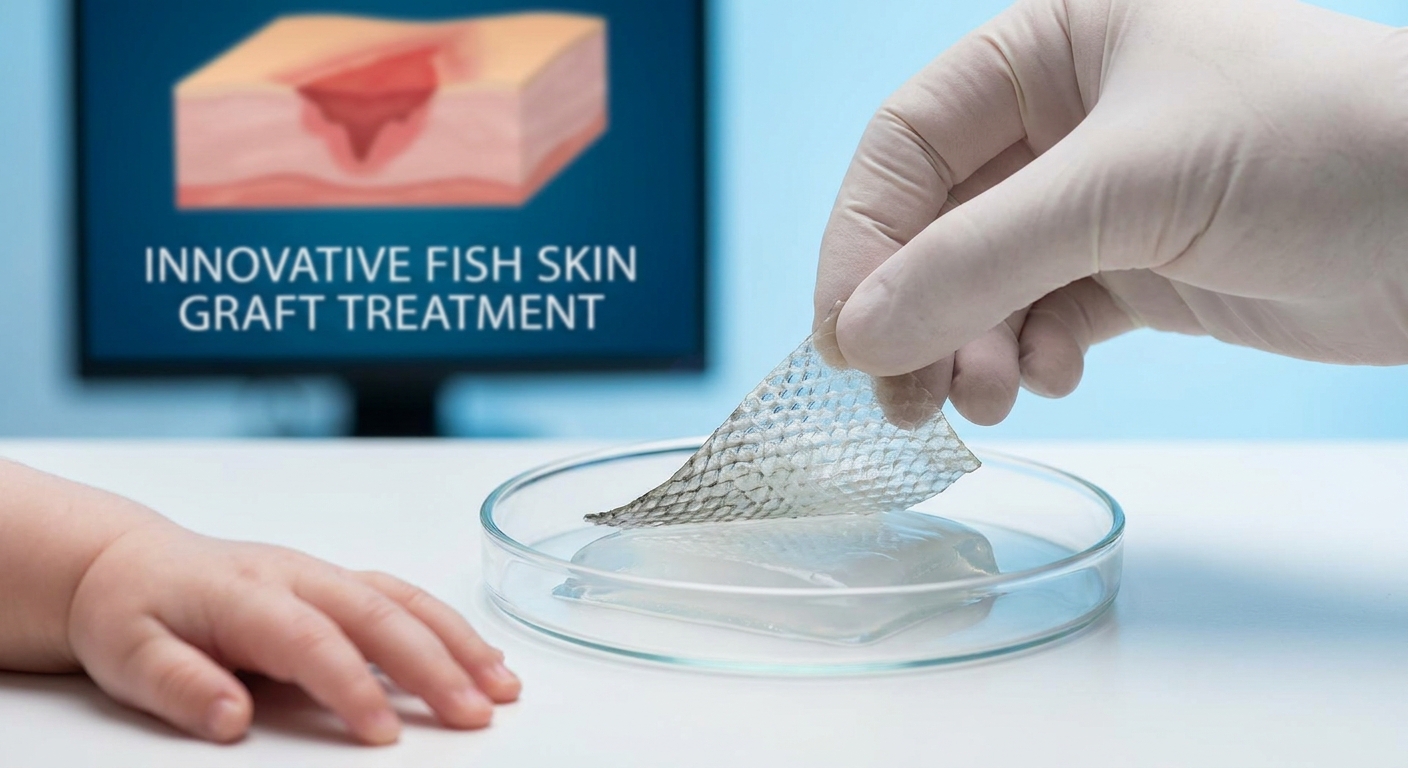
In a remarkable display of medical innovation, doctors have successfully used a groundbreaking technique to heal a life-threatening wound on a newborn baby. The unconventional material at the heart of this success story? Sterilized fish skin. This case highlights a growing field of medicine that looks to nature for powerful healing solutions, offering new hope for patients with severe wounds and burns.
A Life-or-Death Challenge
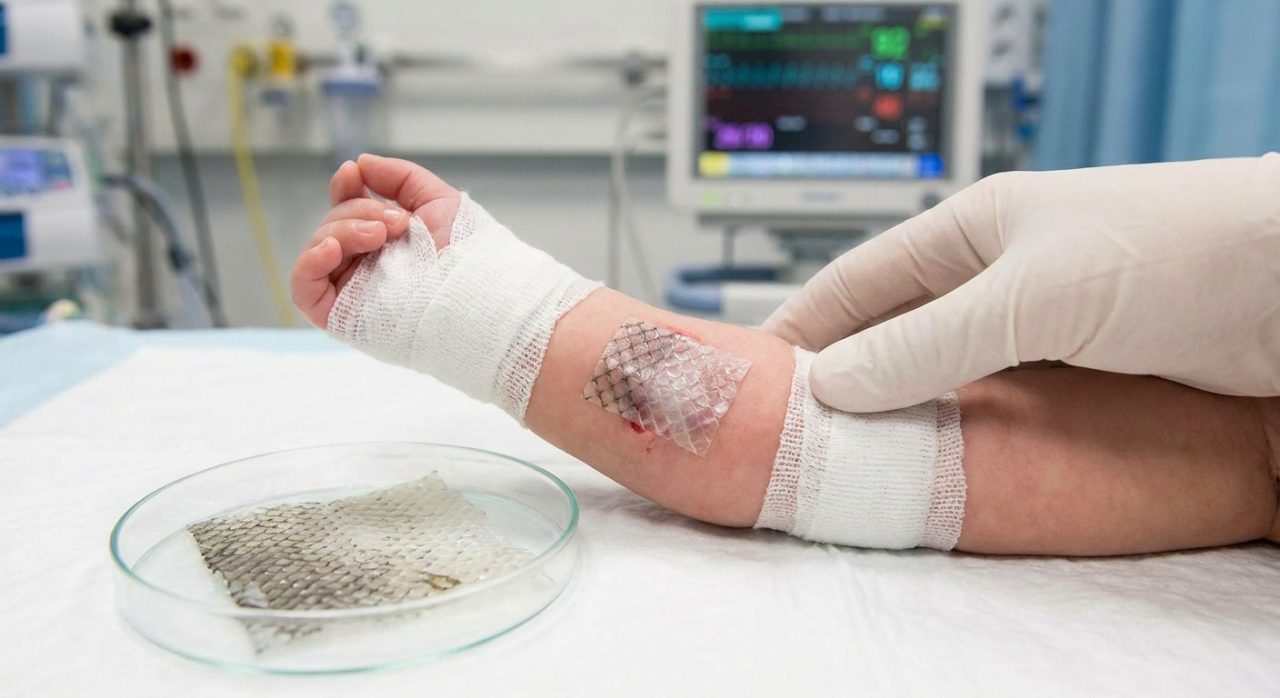
The infant, born prematurely, developed a severe and deep wound that exposed underlying tissues. For such a tiny and fragile patient, traditional treatments like skin grafts posed significant risks. Major surgery would be incredibly stressful on the baby’s system, and the risk of infection was dangerously high. Standard dressings were not providing the necessary environment for healing, leaving the medical team in a desperate search for a viable alternative.
Faced with a critical situation, the clinical team decided to turn to an emerging therapy that has shown incredible promise in treating severe burns in adults: xenografts made from tilapia fish skin. While it may sound strange, this biological dressing offered a unique combination of properties that made it an ideal candidate for this delicate case.
The Science Behind Fish Skin Grafts
Using fish skin for medical purposes is not just a random choice; it is backed by compelling science. The skin, primarily from the tilapia fish, is carefully processed and sterilized to remove any potential for disease transmission, leaving behind a resilient, collagen-rich matrix.
Key Advantages of Tilapia Skin
The benefits of using fish skin as a biological bandage are numerous and significant, especially when compared to other treatment options.
- High Collagen Content: Tilapia skin has a high concentration of Type I and Type III collagen, which is remarkably similar in structure to human skin. This collagen provides a natural scaffold for the body’s own cells to grow and regenerate tissue.
- Natural Barrier: When applied to a wound, the fish skin acts as a barrier, protecting it from dehydration and bacterial contamination. This drastically reduces the risk of infection, a major concern in any open wound.
- Pain Reduction: By covering exposed nerve endings, the fish skin dressing significantly reduces pain for the patient. This also means fewer dressing changes are needed, minimizing trauma to the wound and distress for the patient—a critical factor for a newborn.
- Promotes Faster Healing: The moisture-retaining properties and collagen framework of the fish skin create an optimal environment for healing, encouraging faster tissue regeneration and reducing the likelihood of significant scarring.
The Infant’s Remarkable Recovery
The medical team carefully applied the sterilized fish skin directly onto the baby’s wound, where it acted as a second skin. Unlike traditional gauze dressings that need to be changed frequently, the fish skin could be left in place for days. Over time, the baby’s own skin began to heal underneath this protective layer.
The doctors observed rapid improvement. The wound bed remained clean, signs of new tissue formation were evident, and the infant appeared to be in far less discomfort. The fish skin was gradually absorbed by the body as new skin formed, eliminating the need for a painful removal process. Within a matter of weeks, the once life-threatening wound had healed completely, leaving minimal scarring.
A New Frontier in Wound Care
This infant’s successful treatment is a powerful testament to the potential of fish skin in modern medicine. While the practice was pioneered in Brazil for adult burn victims, its application in pediatric and neonatal care opens up a new frontier.
The low cost and high availability of tilapia make this a particularly promising solution for use in low-resource settings around the world. As research continues, we may see fish skin grafts become a standard of care for treating a wide range of difficult wounds, from diabetic ulcers to complex surgical incisions. This case proves that sometimes, the most advanced solutions can be found in the most unexpected places, combining the genius of nature with the ingenuity of medical science.














Leave a comment